Is Your Ad Budget Going to Bots? The Hidden Problem With Digital Ads
51% of web traffic is bots. Run Facebook or Google ads and half your budget may be reaching machines, not customers. What small businesses should do about it.
You set up a Facebook ad campaign. The dashboard says 10,000 impressions. Ten thousand! You feel briefly excellent. Then you wonder how many of those impressions have a pulse, and the dashboard goes quiet.
This isn't a conspiracy theory. It's just how digital advertising works now.
The Numbers Are Worse Than You Think
A 2025 report from Imperva found that automated traffic exceeded human traffic for the first time: 51% of all web activity in 2024 was bots. Not the helpful ones that index your site. Bad bots, built to inflate metrics, commit click fraud, and quietly hoover up ad budgets.
The financial damage is staggering:
| Problem | Scale |
|---|---|
| Wasted on bot traffic (2024) | £190 billion |
| Programmatic ads that may be bots | Up to 50% |
| Projected ad fraud cost by 2028 | £137 billion |
"For the first time in a decade, automated traffic surpassed human activity, accounting for 51% of all web traffic in 2024." Source: 2025 Imperva Bad Bot Report
You pay per thousand impressions. Nobody in that chain gets a bonus for telling you 500 of them were scripts.
What This Means for Your Business
If you're a small business running digital ads, you're in a game where the scoreboard is scored by someone else:
The click fraud problem: Competitors can click your ads to drain your budget. Bot farms click ads to earn commissions. You pay for every click, real or fake.
The impression inflation problem: Platforms profit from high impression counts regardless of whether humans see them. More "reach" looks better on your dashboard, even if the reach is fake.
The attribution problem: When half the traffic is bots, your analytics become fiction with charts. That "successful" campaign might have converted one real person and a thousand scripts.
It lands hardest on the little guy. Big advertisers have fraud detection teams and enough budget to shrug off the waste. A local café spending £500/month on Facebook ads has neither.
- 10,000 impressions
- Every click charged as real
- The campaign was a success
- Some of those impressions have no pulse
- Some clicks are bot farms or competitors
- One real person and a thousand scripts
Why Physical Advertising Is Different
Here's the joke: the oldest advertising medium going may also be the hardest one to fake.
When someone walks past a billboard, you know three things for certain:
- A human saw it
- They saw it at a specific location
- They saw it at a specific time
No bot farms. No click fraud. No inflated impressions. Nobody has yet written a script that stands at a bus stop. The medium is verified because the medium is physical.
"When you book an OOH campaign, you know when and where it will appear and that you'll have an audience: no ad blockers, fast-forwarding, bots, or fake clicks." Source: Out of Home Advertising Association
The attention metrics back this up:
- 12 seconds average eyes-on attention for billboard ads
- 5.9x memorability advantage over digital
- 98% of the UK population reached weekly by out-of-home advertising
Digital advertising optimises for impressions. Billboards deliver the thing impressions were supposed to be standing in for: an actual person, actually looking.
The Big Companies Already Know This
Watch where the money goes: the tech giants are quietly buying billboards.
Apple, Amazon, and Google (companies that built their businesses on digital advertising) are now major billboard spenders. 25% of the top 100 billboard advertisers are tech or direct-to-consumer brands.
They understand the market they made better than anyone. When metrics can be inflated by machines, a human pair of eyes turns into the premium product.
Out-of-home advertising revenue hit £7.2 billion in the US in 2024, the highest ever. That's 16 straight quarters of growth. Digital billboards are growing even faster.
What Should You Do?
If you're a small business:
1. Question your metrics. That impressive reach number might include significant bot traffic. Look at actual conversions, not impressions.
2. Diversify your channels. Don't put the whole budget somewhere fraud runs rampant. Test channels that verify themselves.
3. Consider local physical advertising. A billboard near your shop reaches real humans in your actual catchment area. No bots. No fraud. Just eyeballs.
4. Start small and measure. You don't need a £5,000 campaign to test billboard advertising for your small business. Platforms now let you book a single screen for a single day. Book one, watch it, judge us on what happens.
To be fair to the bots, they never claimed to be customers. The dashboard did that. The digital ad model assumed human attention, and that assumption is coming apart. Whoever adapts early gets the advantage.
The web's advertising model was built on human attention converted to tracked impressions. In 2026, you can't reliably distinguish humans from machines online. The physical world still can.
Related Articles
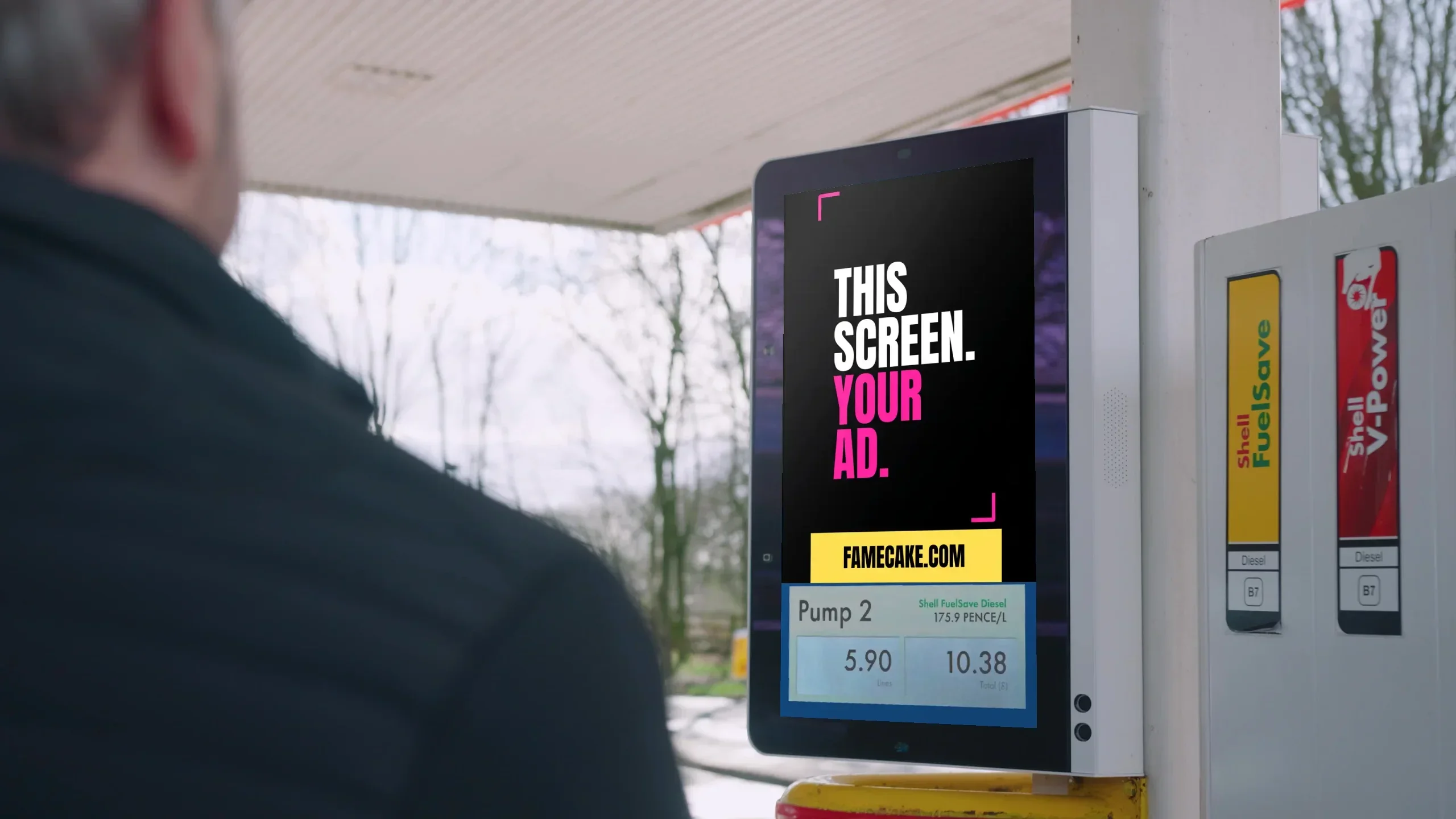
Shell Forecourt Advertising: A Whole Petrol Station for £30 a Day
Put your ad on a whole Shell petrol station forecourt for £30 a day. 89 forecourts, most with 6 to 12 screens, recently about 11,000 plays a day. Here are the real numbers.
UK Billboard Advertising Just Had Its Best Second Quarter Ever
UK outdoor advertising earned £402.6m in Q2 2026, up 12.7% and a record for the quarter. What drove it, and what it means for a small business with £20.
Are Manchester Billboards Really 45% Cheaper Than London? Real Prices (2026)
One trade piece says Manchester billboards cost 45% less than London. We compared real day rates on 160 screens. For small advertisers, the gap mostly disappears.