Billboard Advertising for Gyms: How Local Screens Fill Classes
How gyms, studios and personal trainers use digital billboards to win local members. Day rates from £10 to £15 a screen, no contract, live in minutes.
A gym lives or dies on catchment. Almost everyone who joins yours lives or works within a few miles of the front door, because nobody drives across town to use a treadmill. That is the single most useful fact in gym marketing, and it is exactly what a local billboard is built for.
You don't need a national campaign. You need the people who already pass your door to notice you're there, and to remember the name when January hits.
Why a screen suits a gym
Fitness is a proximity business. The catchment is small, the decision is emotional, and the trigger is often a specific moment: a new year, a holiday booked, a pair of jeans that stopped fitting. A billboard near your gym catches people in the exact area they'll be a member, at the exact time of day they're thinking about it.
For years this was off the table. Getting on a billboard meant a media buyer, a two-week minimum and a budget that started around £5,000. A single studio owner was never going to email a stranger a PDF and wait a fortnight to promote a spin class. So they didn't, and the local screen stayed the preserve of national chains.
Self-service digital screens took the door off. You book one screen's time directly, from around £10 to £15 per day per screen depending on size. No contract, no minimum spend, live in minutes. See the full pricing.
- A media buyer and a two-week minimum
- Budgets starting around £5,000
- Email a PDF, wait a fortnight
- £10 to £15 per day per screen
- No contract, no minimum spend
- Live in minutes
The January rush is the obvious one
Roughly a tenth of all gym joiners sign up in January. Every gym in town knows it, which is why every gym in town is competing for the same resolutions in the same three weeks. The ones that win aren't always the cheapest or the nearest. They're the ones people already recognise.
Here's the calendar that actually matters:
- Late December: people are already deciding. Get seen before the 1st, not on it.
- First two weeks of January: peak intent, peak competition. This is when you spend.
- February: the drop-off. A cheap reminder screen keeps you in front of the ones who wobbled.
A billboard on the commuter route into your area, running for the back half of December and the first fortnight of January, costs less than you'd think. Two or three screens near your catchment for that window is a couple of hundred pounds, not a couple of thousand. Compare that to the cost of a traditional agency booking and the maths stops being close.
It isn't only January
The new-year rush gets the headlines, but a screen earns its keep the rest of the year too.
New studio launches
Opening a new site is the moment recognition is worth the most and you have the least of it. A screen near the new location, running for the two weeks around your launch, tells the neighbourhood you exist before they've walked past the window. "Now open" on a billboard does more than the same words on a sandwich board nobody reads.
Membership drives and offers
Running a "first month free" or a referral push? Put the offer where your future members already are. A digital screen means you can change the message the moment the offer changes, with no reprinting and no reorder. Swap "January sale" for "bring a friend" in the time it takes to type it.

Class and timetable promotion
Launched a new class? Hired a coach people will travel for? Got a 6am HIIT slot that's half empty? A screen near the gym is a live noticeboard for the exact people who could fill it. You're not advertising to the whole city. You're reminding the people two streets away that the class exists.
The everyday reminder
Most people who'll join your gym this year haven't decided yet. A screen they pass on the school run or the commute does the quiet work: first exposure, recognition, then, when the moment comes, the name they already know. Familiarity is doing the selling long before the offer does.
What it actually costs
Here's a rough guide for a single-site gym or studio thinking about a local campaign:
| Goal | Setup | Rough cost |
|---|---|---|
| Test the water | 1 screen near the gym, one week | £70 to £105 |
| January push | 2 to 3 screens across the catchment, two weeks | £280 to £630 |
| New studio launch | 3 to 5 screens around the new site, two weeks | £420 to £1,050 |
| Class or offer nudge | 1 screen, a few days | £30 to £75 |
Self-service rates, VAT included. The same reach through an agency runs into the thousands, plus the phone call. You can browse the screens near you and see the live price on each one before you commit to anything.
Targeting the right screens
The screen matters more than the budget. A cheap screen in the wrong place beats nothing, but a well-chosen one near your catchment beats everything. Pick for where your members actually are:
- Commuter routes into your area: you catch the same people on repeat, which is how recognition builds.
- Near the gym itself: reinforces the "there's a gym here" signal for anyone already local.
- By retail parks and high streets in your catchment: captive audience, people on foot, already out and about.
- Near competitors, honestly: if someone's shopping around, be the name they see on the way.
The point isn't reach for its own sake. A national gym chain wants millions of impressions. You want the few thousand people who could genuinely walk through your door, and you want them to see you three times.
You don't need a designer
Most gym owners aren't sitting on a marketing team, and that used to be a wall. Design a billboard yourself and it looks like it. Pay a designer and that's £200 to £500 before the screen costs a penny.
The AI designer handles it. Upload a photo of the gym, type what you want it to say, and it lays out something that looks like a proper advert rather than a flyer. Change the copy for a new offer whenever you like, at no extra cost. Keep it simple: a name, an offer, a location. You've got seconds of someone's attention, not a paragraph of it.
Measure it like you'd measure anything
Billboards are famously hard to attribute, and we're not going to pretend otherwise. But a gym has better tools than most:
- A promo code on the screen. "BILLBOARD" for a free week. Now every signup is traceable.
- "How did you hear about us?" on the join form. Cheap, and it works.
- Watch the trial bookings in the weeks a screen is live versus the weeks it isn't.
- Ask at the desk. New members will tell you they've been "seeing you everywhere."
Run one screen for a week, watch the numbers, and decide with evidence. If it does nothing, you're out the price of a couple of PT sessions and you've learned something. If it works, you scale it by the day. That's the whole point of there being no contract.
For more on why a physical presence pulls above its weight for local businesses, this holds doubly for gyms: why local billboards make small businesses look bigger.
Getting started
If you run a gym, a studio or a PT business and you're competing for members on your own high street, a local screen is the closest thing to unfair advantage that a few hundred pounds buys. No agency, no contract, no fortnight's wait.
Pick a screen your future members actually pass, put a clear offer on it, and go live before your competitors have finished their sales call. See how it works for gyms or browse screens near you and check the live price in a couple of minutes.
Prices are indicative 2026 UK self-service rates and include VAT. Actual costs vary by screen, size and availability.
Related Articles
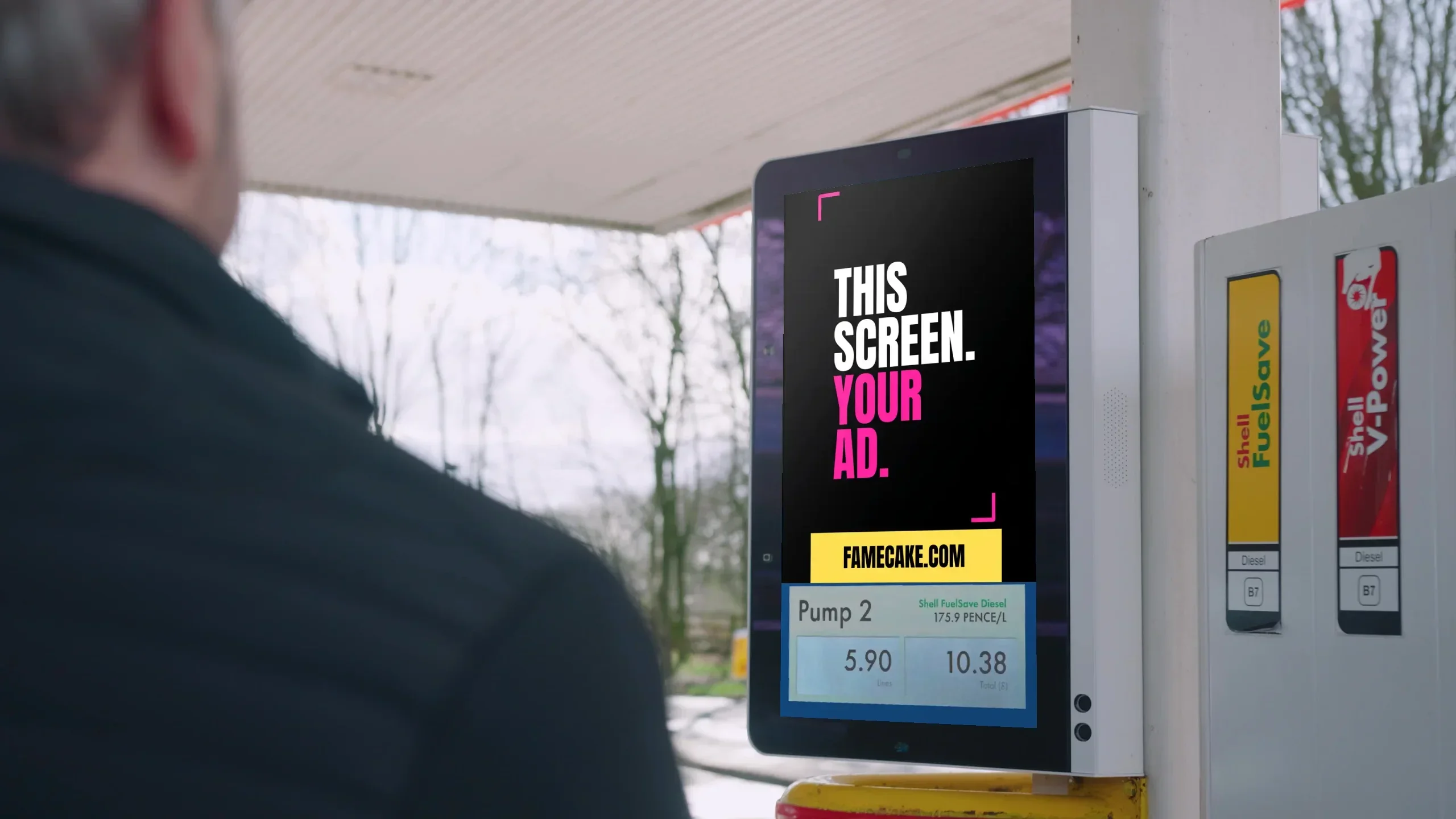
Shell Forecourt Advertising: A Whole Petrol Station for £30 a Day
Put your ad on a whole Shell petrol station forecourt for £30 a day. 89 forecourts, most with 6 to 12 screens, recently about 11,000 plays a day. Here are the real numbers.
UK Billboard Advertising Just Had Its Best Second Quarter Ever
UK outdoor advertising earned £402.6m in Q2 2026, up 12.7% and a record for the quarter. What drove it, and what it means for a small business with £20.
Are Manchester Billboards Really 45% Cheaper Than London? Real Prices (2026)
One trade piece says Manchester billboards cost 45% less than London. We compared real day rates on 160 screens. For small advertisers, the gap mostly disappears.