Billboard Advertising for Restaurants: Fill Quiet Nights and Drive Bookings
How restaurants, cafes and takeaways use digital billboards to drive footfall, fill quiet nights and announce specials. From £10 a day, no contract, live in minutes.
Your food is good. The tables on a Tuesday say otherwise. That gap is almost never about the cooking, it's about who knows you're open tonight and who forgot you exist. A billboard on the road your customers already drive down closes it faster than most things you can buy.
For years that road was closed to you. Booking a billboard meant a media buyer, a two-week cycle and a budget that started at £5,000. No restaurant with a Tuesday problem was ringing an agency. Self-service digital screens took the phone call out of it, so now a takeaway with a tenner books the same screen the supermarket does.
Why billboards suit restaurants specifically
Most restaurant advertising asks people to remember you later. A billboard catches them at the moment that matters: hungry, nearby, deciding. Someone driving home at 6pm hasn't planned dinner yet. That's the whole game.
- Everyone who passes sees it. No targeting to set up, no algorithm deciding who's worthy. If they're on the road, they see the screen.
- It reaches people phones can't. 42.7% of internet users run ad blockers. Nobody blocks a large lit rectangle by a roundabout.
- Proximity does the work. A screen near your door turns "I keep seeing that place" into "let's just go there tonight." Outsmart research found 83% of consumers recall seeing outdoor advertising in the 30 minutes before a purchase decision.
- It makes you look established. A new bistro on a billboard reads as a fixture, not a gamble. See a place on a screen and you quietly assume it's been there for years.
What restaurants actually put on screens
The best restaurant billboard isn't a logo and a phone number. It's a reason to come in tonight.
Fill the quiet nights
Monday and Tuesday are where restaurants bleed money. A digital screen lets you run a message only on the nights you need it, then switch it off when Friday sells itself.
Book the quiet days and skip the rest. "2-for-1 mains, tonight only" on the road home from work is a far better use of a tenner than another quiet dining room.
Announce specials and changes
Because there's no printing and no reprint, you can change the message whenever the kitchen does.
- New menu launch this week
- Sunday roast is back
- Bottomless brunch, Saturdays
- Fresh oysters in, while they last
The message goes live in minutes, so a lunchtime special can be on a screen by 11am.
Launches and openings
Opening a new place is the one time everyone in the area needs to know at once. A cluster of screens around the neighbourhood for launch week does what a soft opening and crossed fingers cannot.
Events and one-offs
Quiz night, a live band, a bank holiday menu, Valentine's, Mother's Day. These are date-specific by nature, and a screen you can book for exactly those dates fits them better than anything you'd print.
What it costs
Here's the honest comparison, restaurant-sized.
| Route | Typical cost | Booking | Best for |
|---|---|---|---|
| Agency digital billboard | £500 to £5,000 / week | Media buyer, 1-2 week min | National chains |
| Traditional printed billboard | £200 to £800 / week | 2-week cycle, printing on top | Long static campaigns |
| Self-service digital screen | ~£10 to £15 per day | By the day, live in minutes | Local restaurants, cafes, takeaways |
Day rates run roughly £10 to £15 per screen depending on size and location. No contract, no minimum spend, no "speak to our team" form. You can see the exact live price on every screen before you commit, which is more than the old way ever offered. For the full breakdown, here's what billboard advertising costs in the UK.
Picking the right screen
You know your customers' routes better than any media buyer does. Use that.
- The commute home. Catch people deciding dinner at 5 to 7pm, before they've defrosted anything.
- Near your door. The closer the screen, the shorter the trip from "saw it" to "sat down." Proximity is the single biggest lever you've got.
- Where your people already are. The high street, the retail park, the road past the school run. Pick the spot you'd point a friend to, not the flashiest one.
Start with one screen you know your customers pass. Browse screens near you and check the live price and footfall before you book anything.
You don't need a designer
The bit that stops most restaurant owners is the advert itself. You cook, you don't do Photoshop at 11pm. So the app has an AI designer built in: describe the special, or drop in a photo of the dish, and it lays out a clean, readable screen advert in seconds. No agency, no £300 design fee, no waiting on a freelancer.
Keep it simple. A screen has you for a few seconds:
- One offer, not five
- A dish photo that looks like the actual food
- Your name and where you are
- A reason to come in tonight, not someday
Does it actually work
Honest answer: it works well for what restaurants need, and badly for what they don't. Billboards drive local awareness and footfall. They will not tell you exactly who clicked, because there's no click, and if that's the only number you trust then a screen is the wrong tool and we'd rather say so now.
- Tell you exactly who clicked
- Suit you if clicks are the only number you trust
- Drives local awareness and footfall
- Makes you look real and staying
- Measurable with a code and covers per night
But you can still measure it. Run a code ("show this screen for a free side"), ask new tables how they heard about you, watch your bookings on the nights the screen is live versus the nights it isn't. The barrier to finding out used to be £5,000 and a fortnight. Now it's the price of two puddings and a spare ten minutes.
Physical presence also earns trust that a feed can't. A billboard costs money and everyone knows it, so it reads as a restaurant that's real and staying. That halo lifts how good people assume the food is before they've tasted a thing. Slightly unfair. Very useful. There's more on why local billboards make small businesses look bigger if you want the psychology.
Start with one quiet night
You don't need a campaign. You need one screen, on one road, on one night the tables are empty.
- Pick the screen your customers genuinely drive past
- Let the AI designer build the advert from a photo of the dish
- Run it for a day and count the covers
- If it fills the room, book it again. If it does nothing, you're out a tenner.
That's the deal traditional out-of-home never offered: test a billboard for the cost of a starter, keep only what works.
See how it works for restaurants, browse screens near you, or check live pricing. Your quietest night is the best one to try.
The old way to promote a restaurant on a billboard took three weeks and a phone call you didn't want to make. Now it takes a photo of tonight's special and a few minutes.
Related Articles
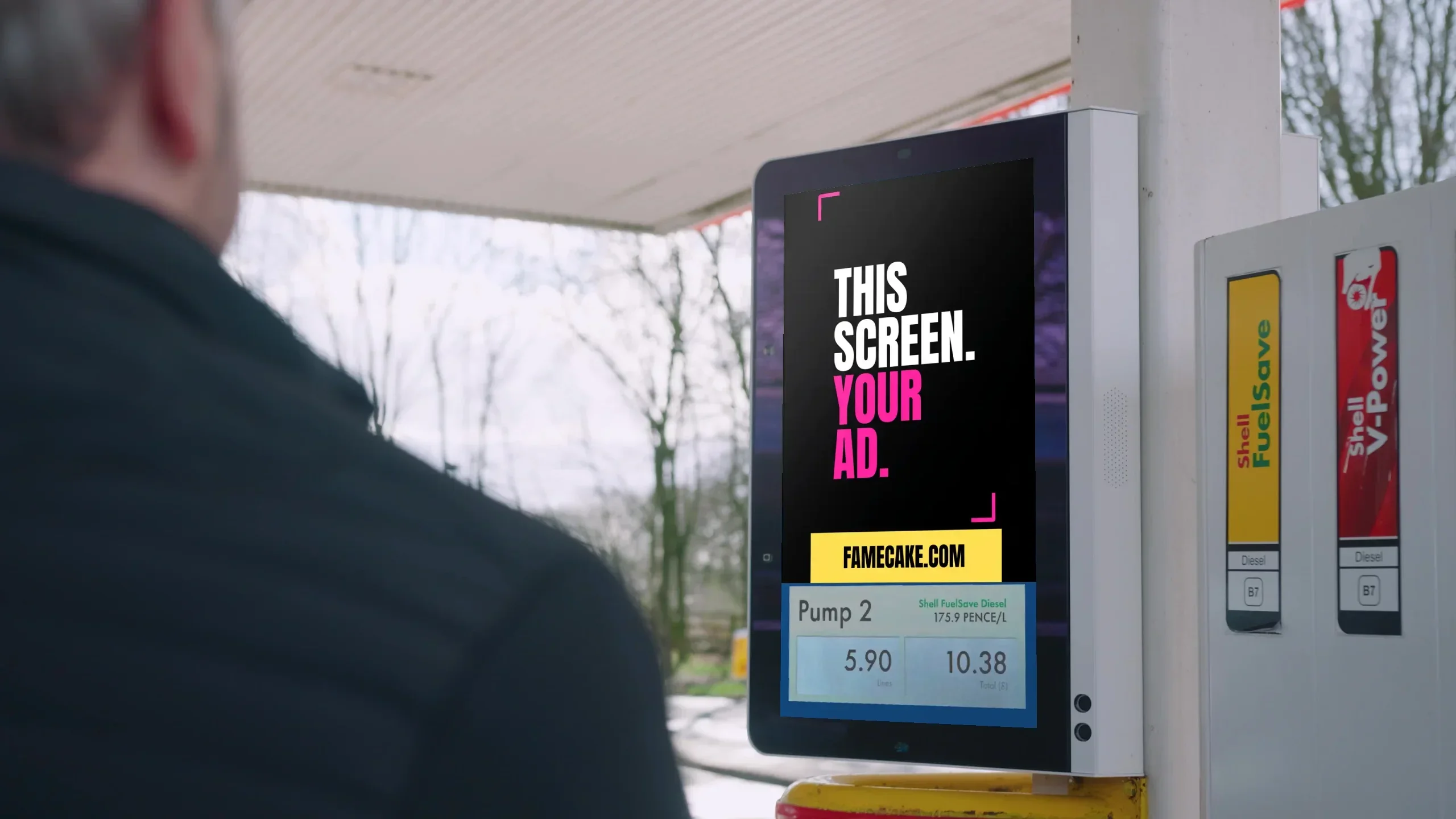
Shell Forecourt Advertising: A Whole Petrol Station for £30 a Day
Put your ad on a whole Shell petrol station forecourt for £30 a day. 89 forecourts, most with 6 to 12 screens, recently about 11,000 plays a day. Here are the real numbers.
UK Billboard Advertising Just Had Its Best Second Quarter Ever
UK outdoor advertising earned £402.6m in Q2 2026, up 12.7% and a record for the quarter. What drove it, and what it means for a small business with £20.
Are Manchester Billboards Really 45% Cheaper Than London? Real Prices (2026)
One trade piece says Manchester billboards cost 45% less than London. We compared real day rates on 160 screens. For small advertisers, the gap mostly disappears.